- 1
Leave Porto between 7:15 and 9 am, or the coaches will be ahead of you all day.
- 2
Book April to June for green terraces, mid-September to mid-October for the harvest colours.
- 3
Cancel up to 24 hours ahead for a full refund, so a changed plan costs you nothing.
Travelers said - what non drinkers loved on their Douro Valley day
Most reviewers rave about the views, calling the panoramas over the valley so beautiful they made the whole day.
Several travelers did not expect the picnic at the end and loved finishing the hike at a river-view table.
Many wished they had more time to linger in the quiet villages and less-touristy corners they passed.
 ★★★★★
Amazing trip! Carlos was knowledgeable and fun, never a dull moment.
Angela · France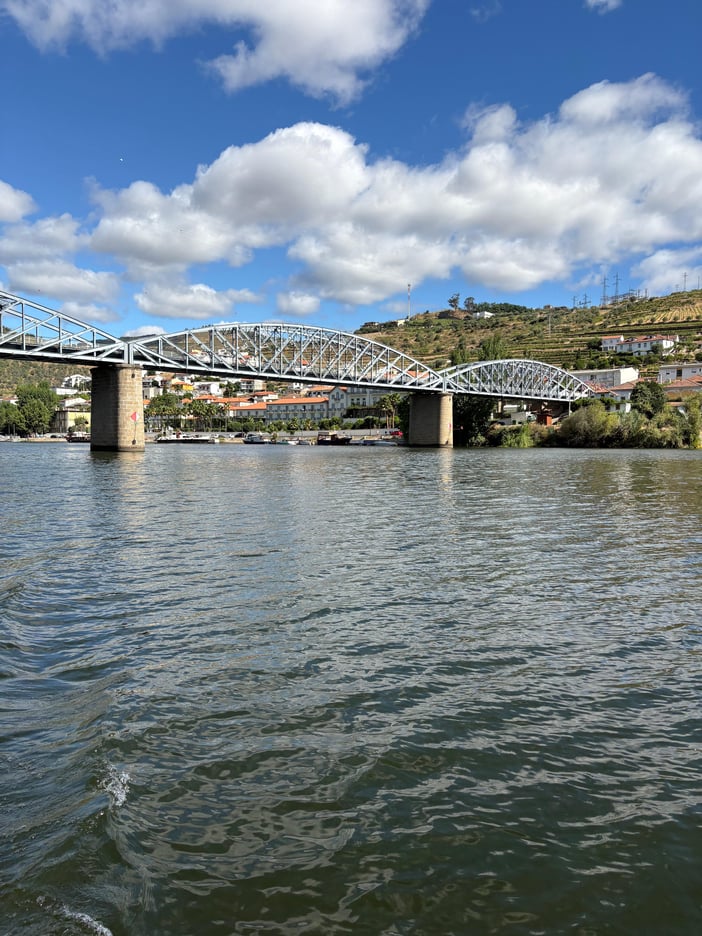 ★★★★★
Ricardo's warmth and knowledge made us comfortable right away. Lilly was very knowledgeable on our relaxed boat ride. Vineyard tasting was good, veg food at Amarante too.
Sachin · India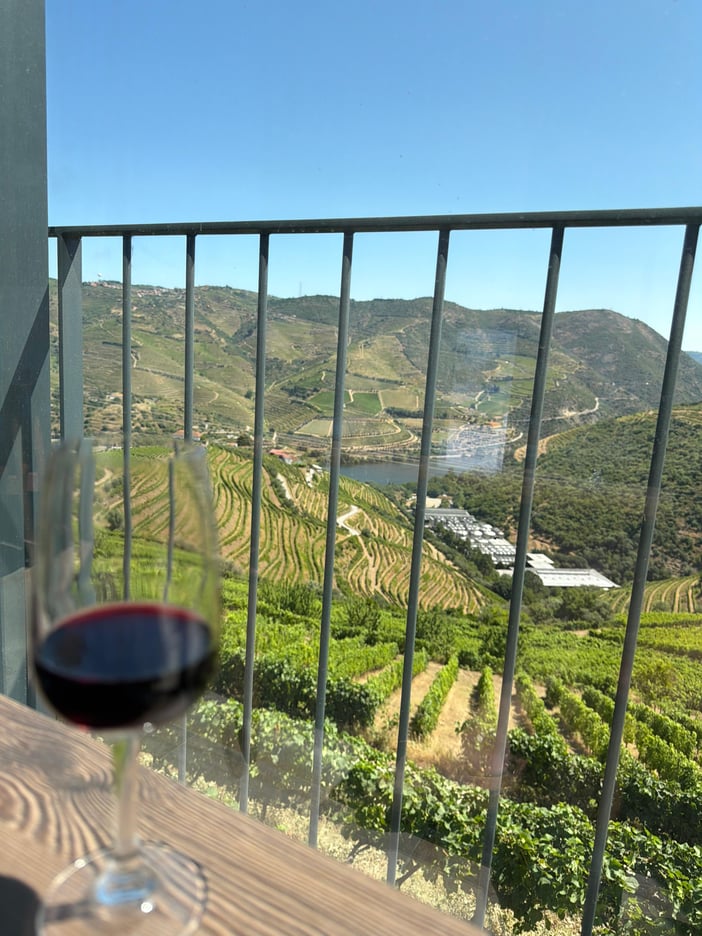 ★★★★★
I can't recommend this enough! Ruben was prompt, professional and fun. Authentic and magical start to finish, our best day trip in several visits to Portugal.
A traveler · United States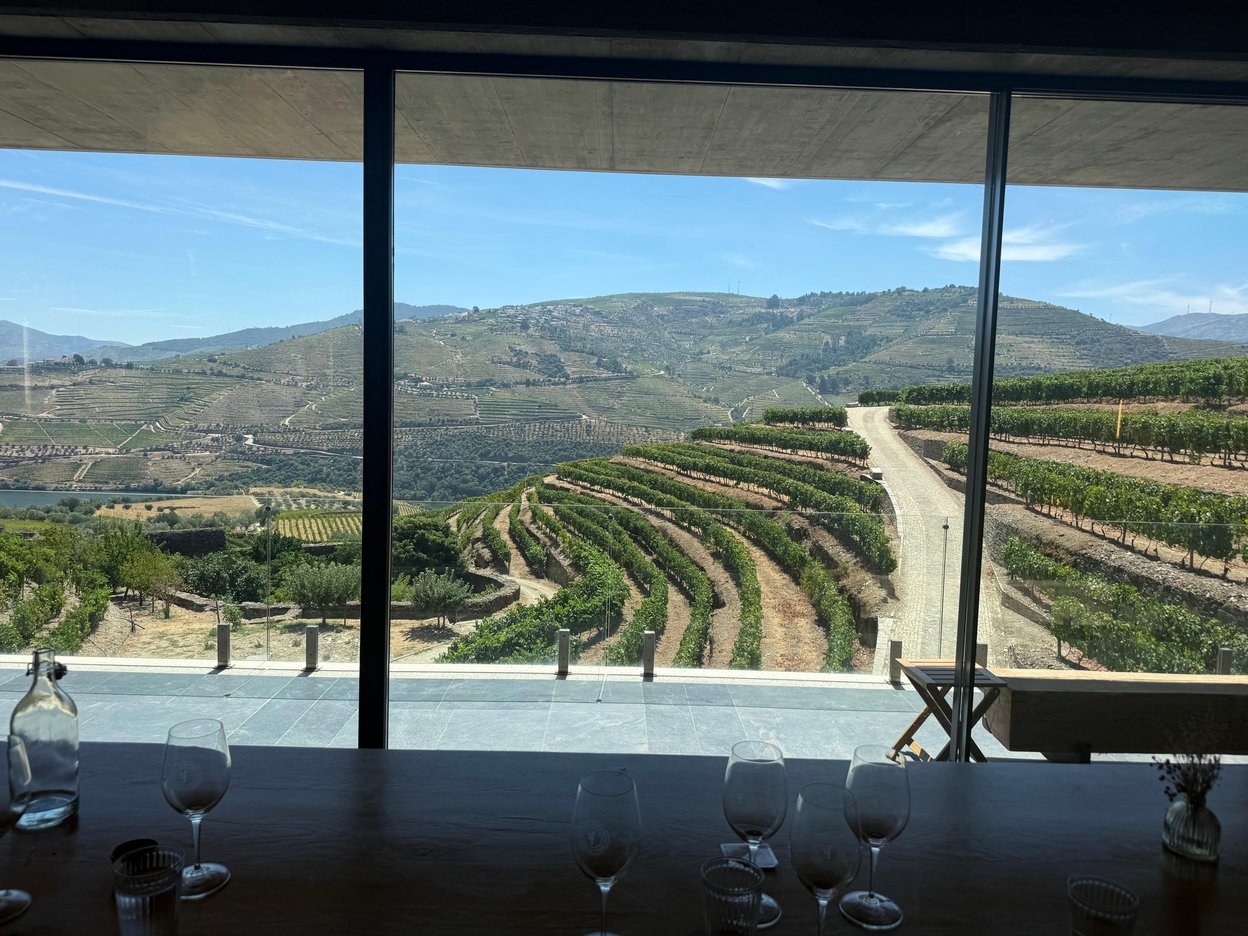 ★★★★★
A lovely boat trip with a small tasting and French explanations. Our super guide then took us up to the heights of Quinta de Carvalhas with stories full of history.
Salomé · France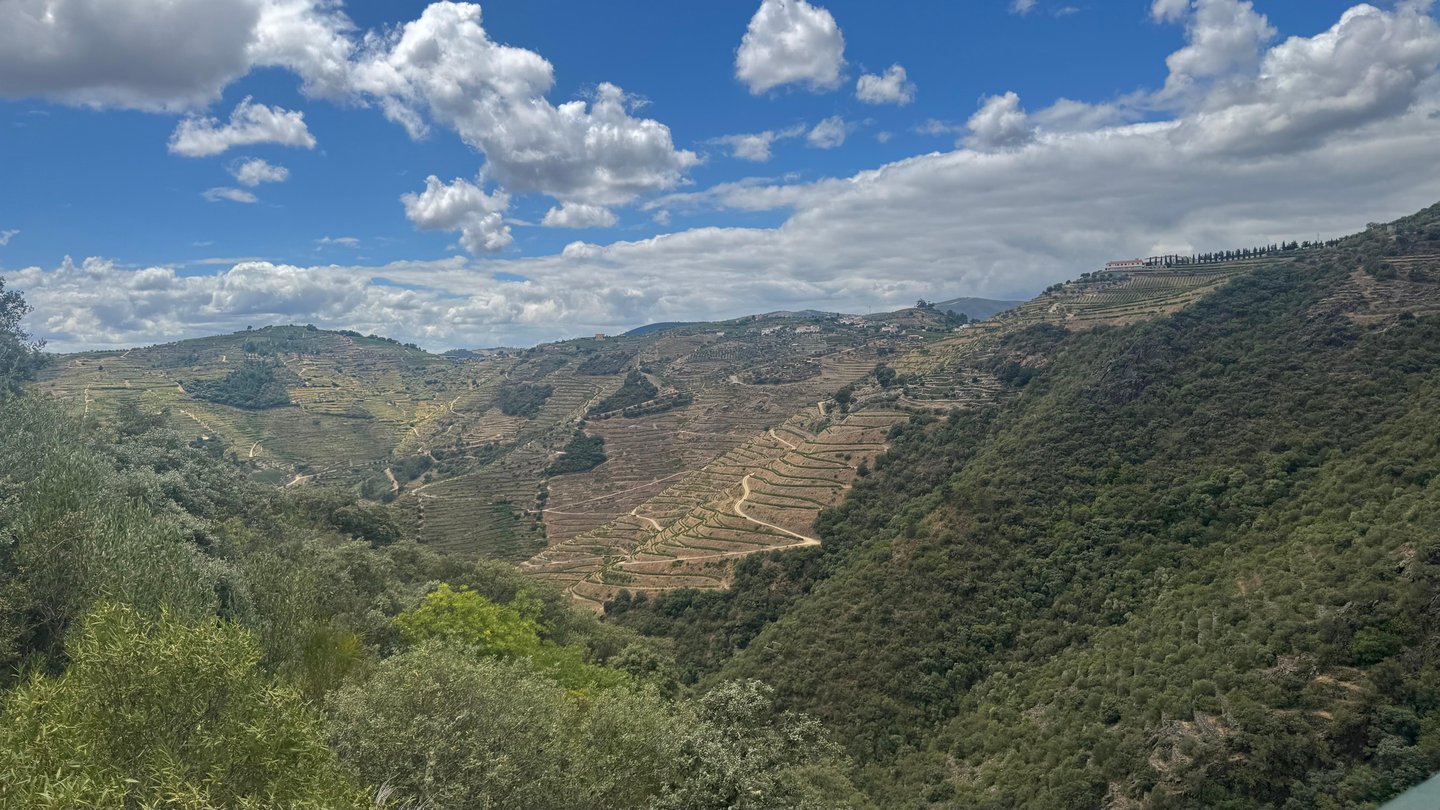 ★★★★★
Pedro and his colleague were very nice and accommodating, we arrived late and they stayed flexible.
Anat · Germany ★★★★★
A varied day using several modes of transport. Arriving at the quinta was a highlight, gorgeous setting. Rita was warm and attentive to everyone.
A traveler · France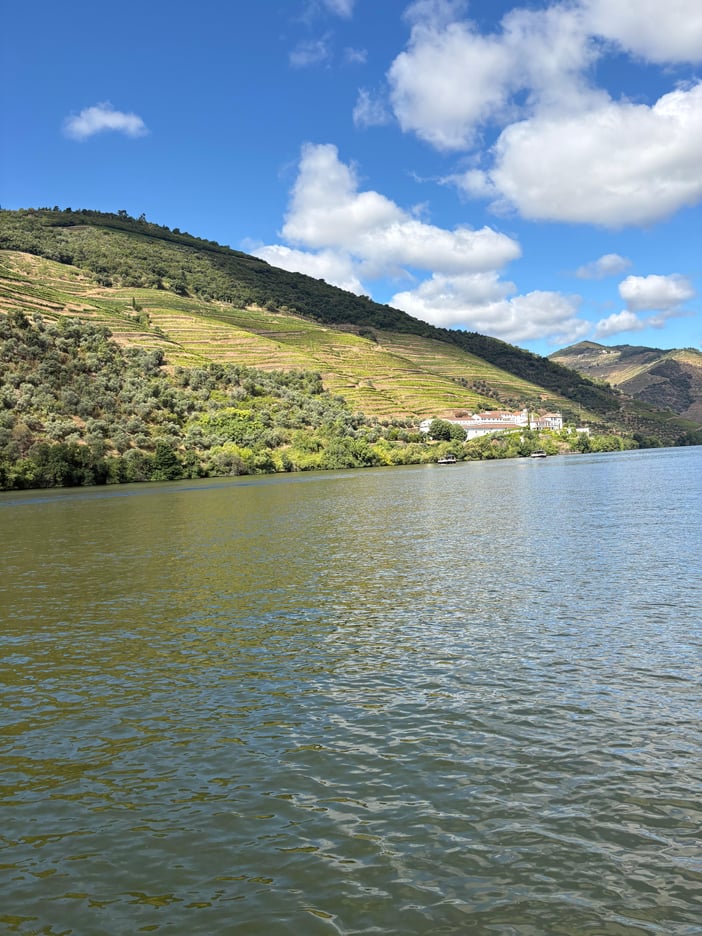 ★★★★★
Amazing trip! Carlos was knowledgeable and fun, never a dull moment. Seven of us, perfect. Great value, boat, transport, tasting at a family estate, Amarante lunch, snacks throughout.
Jessica · United Kingdom
Why the Douro Valley is worth it for non drinkers
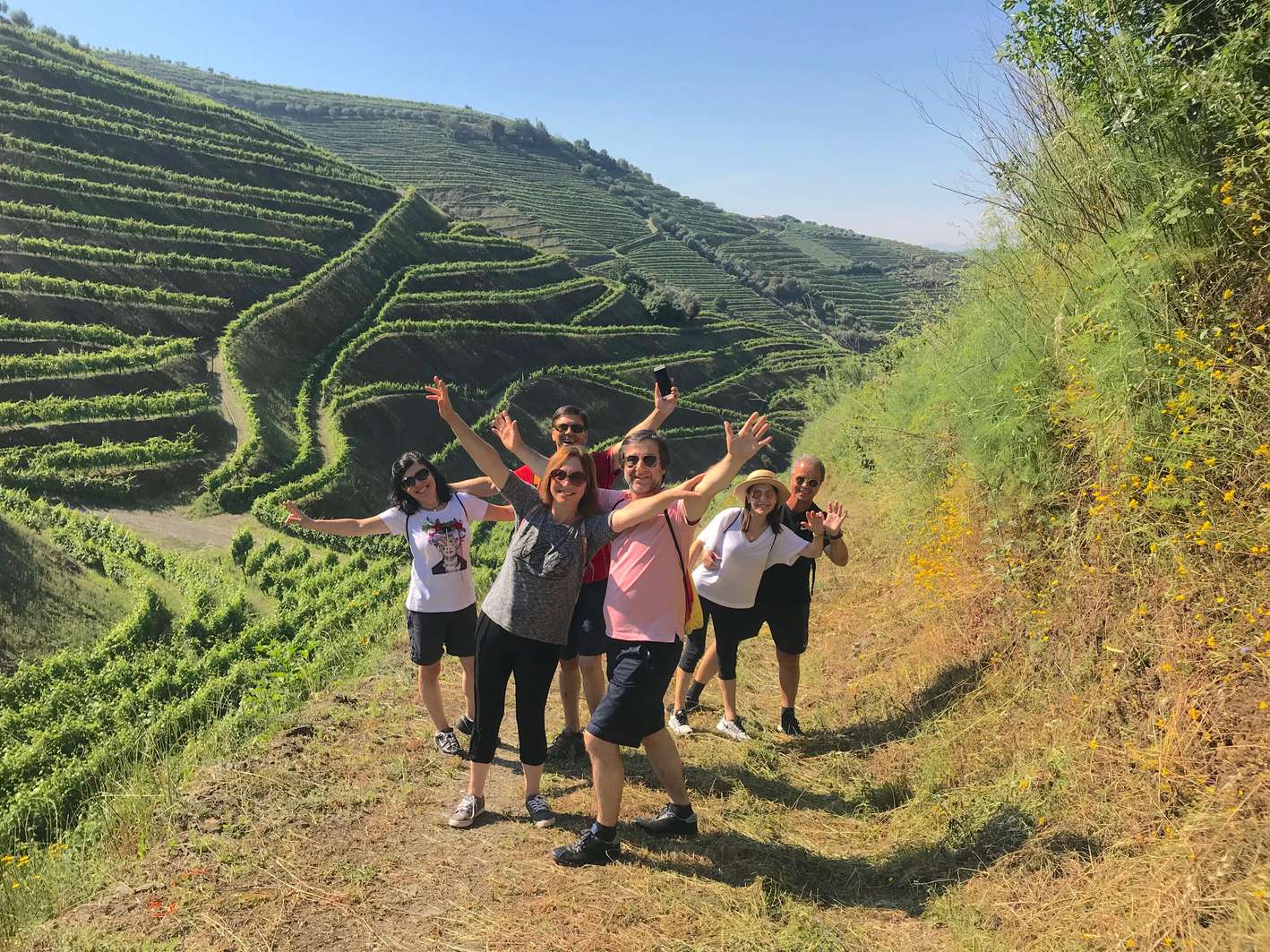
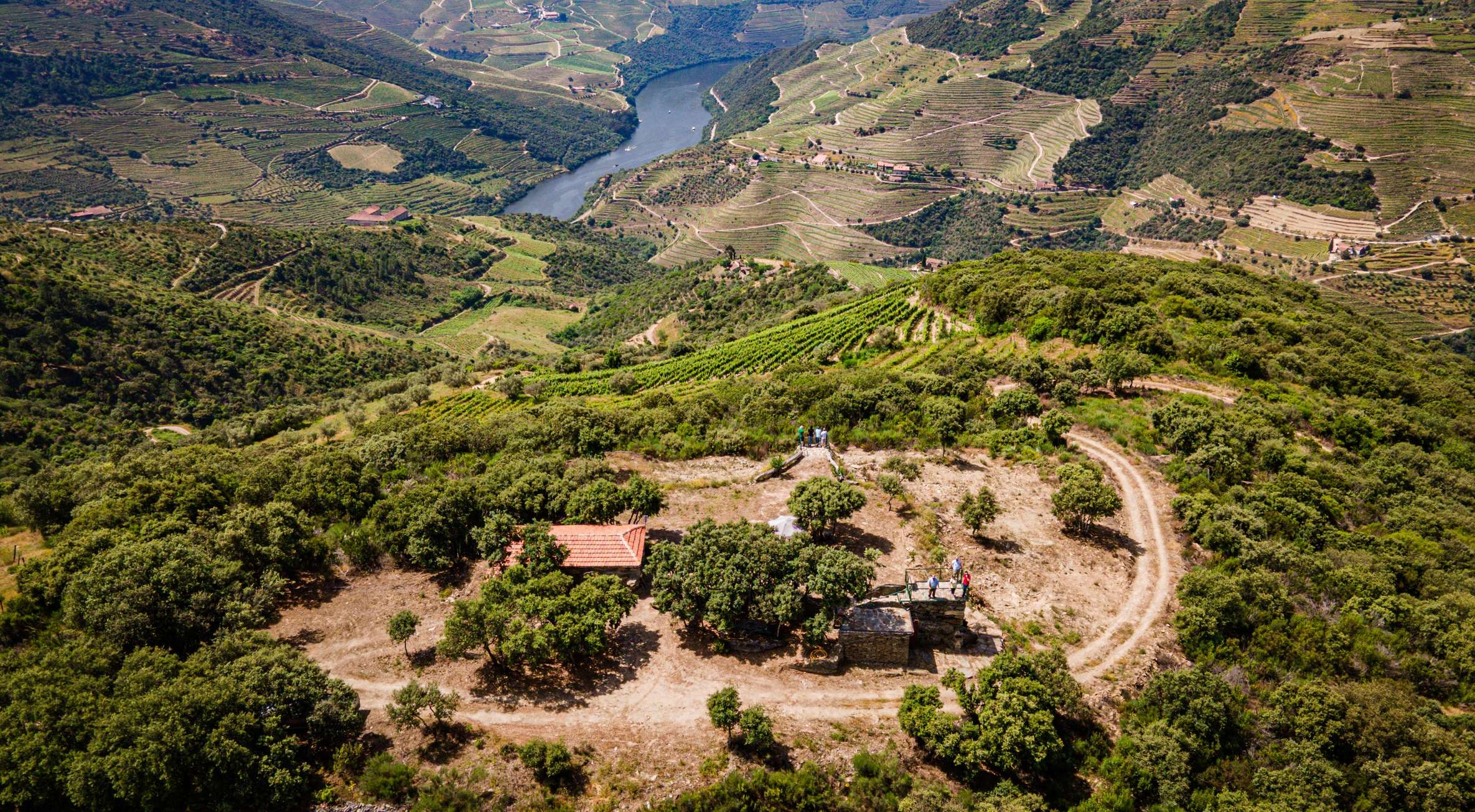
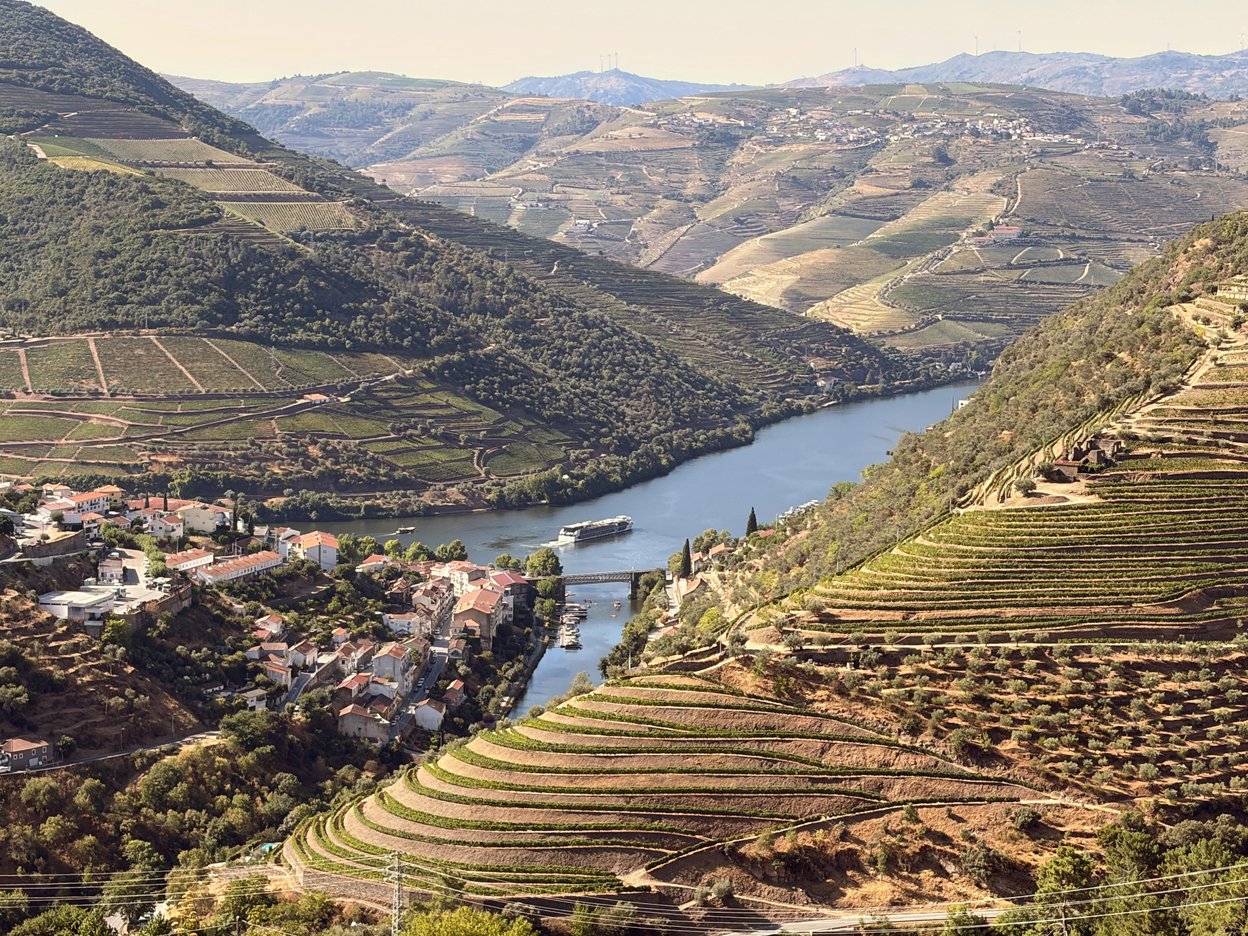
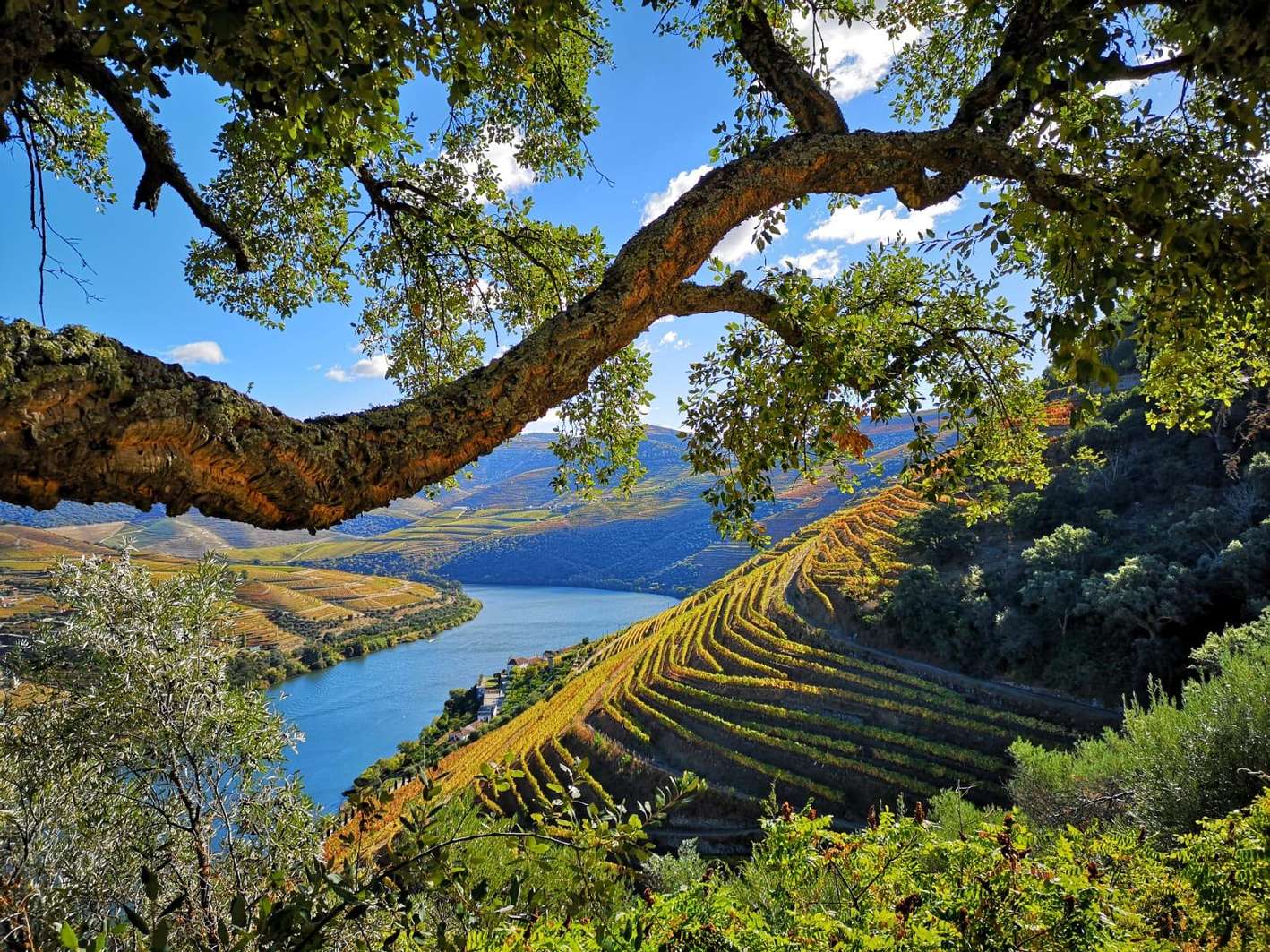
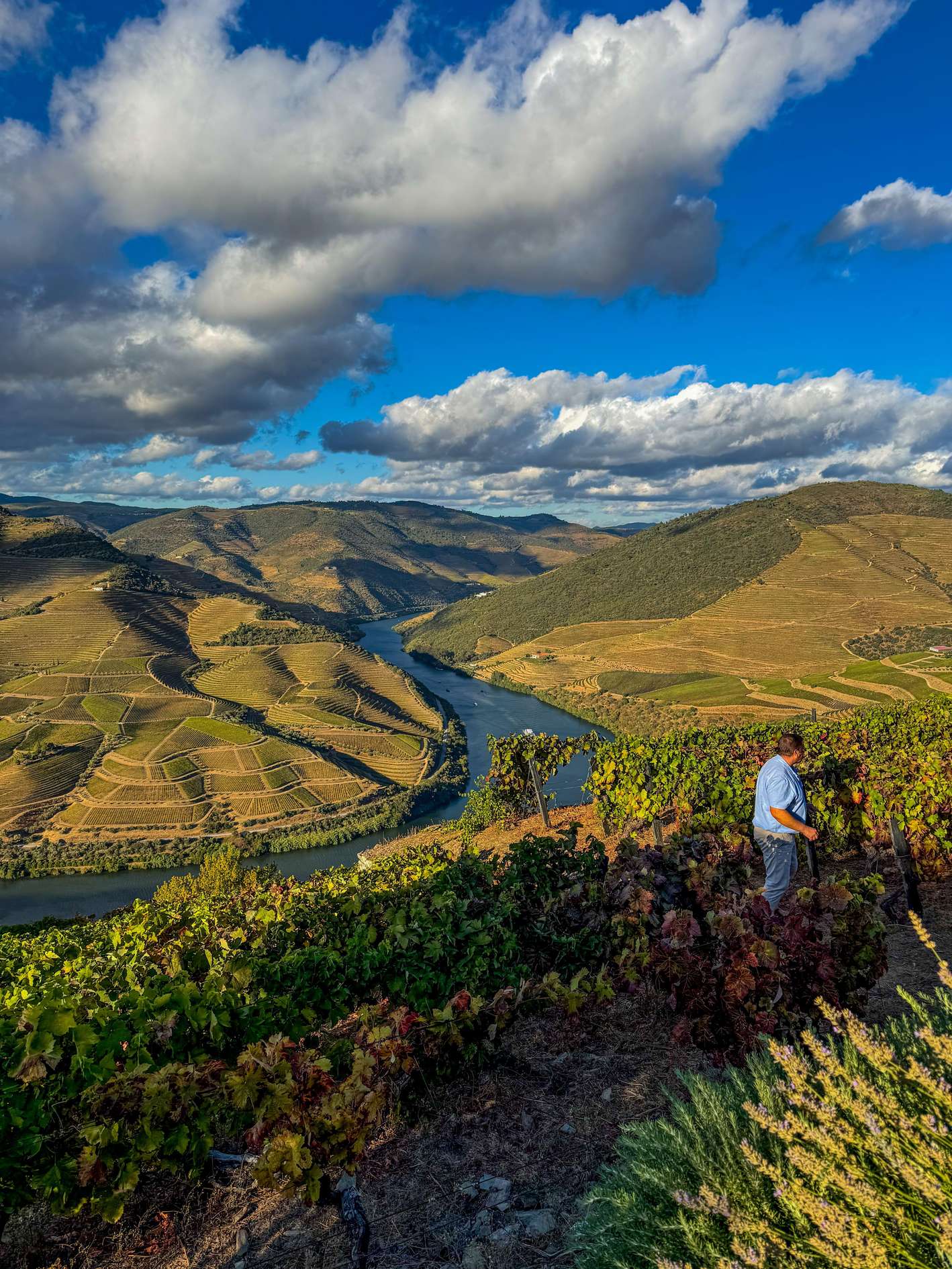
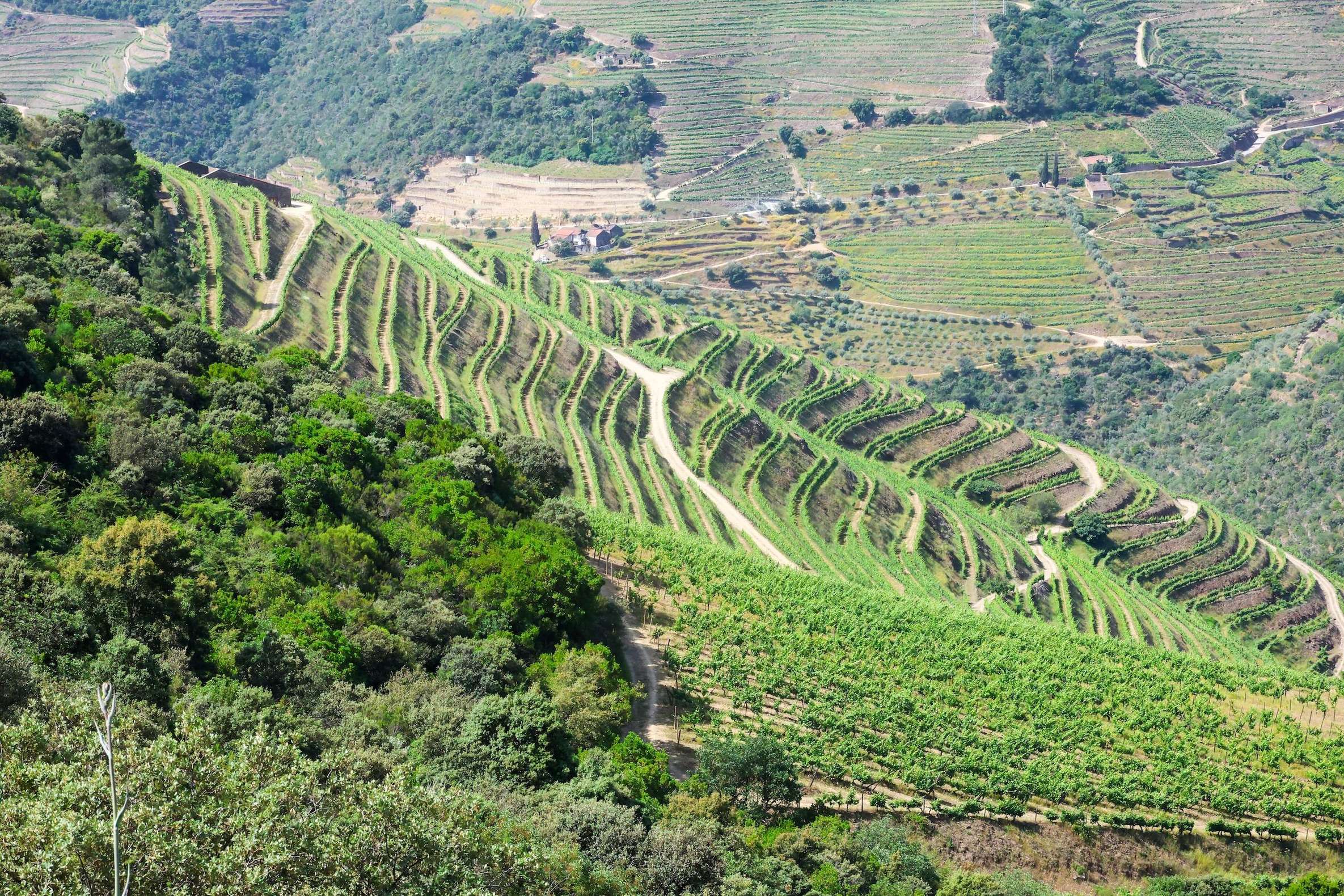
The hillside meets you first in the Douro Valley: steep slopes stacked with dry-stone walls, built by hand over roughly two thousand years and protected as a UNESCO World Heritage landscape since 2001.
The mortarless schist keeps the soil in place on ground too steep for tractors, and that stonework is why the valley looks the way it does from the river.
So the doubt most non drinkers arrive with, that a wine region has nothing for them, falls apart on arrival.
A day fills itself with ridge paths and vineyard trails, panoramic lookouts, an hour on calm river water and a long estate lunch. People who skip the pours entirely report the same thing: the scenery and the food carry the day.
The shape of the day is the real choice. A guided hike, a boat and train route, or an olive oil estate visit each swap the tasting room for something different, and the differences decide who enjoys which.
Side by side: what replaces the wine tasting on each route
| Guided hike | Boat and train day | Olive oil estate day | |
|---|---|---|---|
| Pace | Walking at your own effort, 3 to 5 hours | Moving between river, rail and van | Slow, seated, estate-based |
| What you taste | Water, snacks and a picnic | Regional tapas and a full lunch | Estate olive oil, honey, homemade treats |
| Best for | Active travelers who want the views from above | People who want the river itself | Food lovers who want to sit and be hosted |
| Effort | Moderate on steep terraces | Minimal, all transport handled | Minimal, some stairs |
- Pace
- Walking at your own effort, 3 to 5 hours
- What you taste
- Water, snacks and a picnic
- Best for
- Active travelers who want the views from above
- Effort
- Moderate on steep terraces
- Pace
- Moving between river, rail and van
- What you taste
- Regional tapas and a full lunch
- Best for
- People who want the river itself
- Effort
- Minimal, all transport handled
- Pace
- Slow, seated, estate-based
- What you taste
- Estate olive oil, honey, homemade treats
- Best for
- Food lovers who want to sit and be hosted
- Effort
- Minimal, some stairs
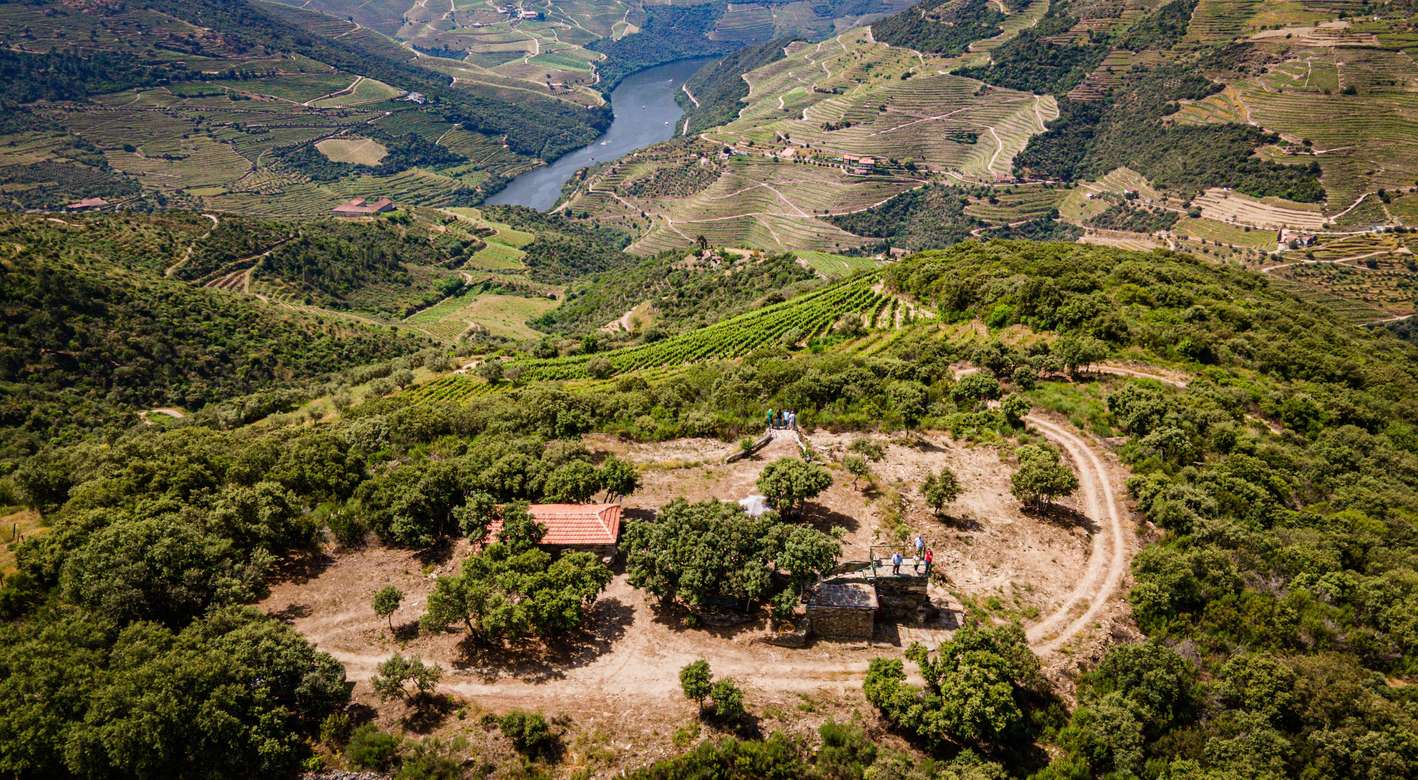
The hike is the purest version: the Douro Valley: Guided Hikes with Ruins & River Views walk starts at Lugar do Esteval with a local guide, takes in the Lagares do Cíbio ruins left behind by the 19th-century phylloxera plague, and ends at an open-kitchen viewpoint over the river.
Three routes cover easy to moderate legs, and the one-way options include the return transfer.
Best time of year to visit the Douro Valley without the crowds
Two windows decide the year. Late April through June brings mild walking weather, bright green terraces and wildflowers on the riverbanks, with none of the harvest machinery around.
Mid-September to mid-October brings the vindima: hillsides turning amber and red, crews hand-picking grapes from dawn, and the smell of fermenting must drifting up from the adega. September is the busiest month of the year for valley visits by a clear margin; October stays busy but cools off.
June is one of the busiest months of the year, offering 15 hours of daylight and warm 24.1°C highs before peak summer sets in.
Tap a month to read it.
August is packed with summer travelers despite scorching 29.3°C highs that create significant midday heat exhaustion risk on trails.
Tap a month to read it.
October remains moderately busy early on, offering mild 19.0°C highs for sightseeing before heavier autumn rains arrive.
Tap a month to read it.
Read that table one way and July looks tempting, all dry days and long light. But open boat decks in the upper valley average nearly 30°C on a July afternoon, against a mild 20°C in October, when rain falls on roughly one day in two.
Walkers should favor the mild months; boaters get a smoother hour on the water in the mornings.
One more date matters. From December through late March the dam locks close for maintenance, so full-day and multi-day river traffic stops; short local boats still run around Pinhão and Porto. And within any week, Tuesday and Wednesday see the lightest crowds, while Saturdays bring the heaviest surge from tourists and local events.

Getting from Porto to the Douro Valley - train, car or tour van
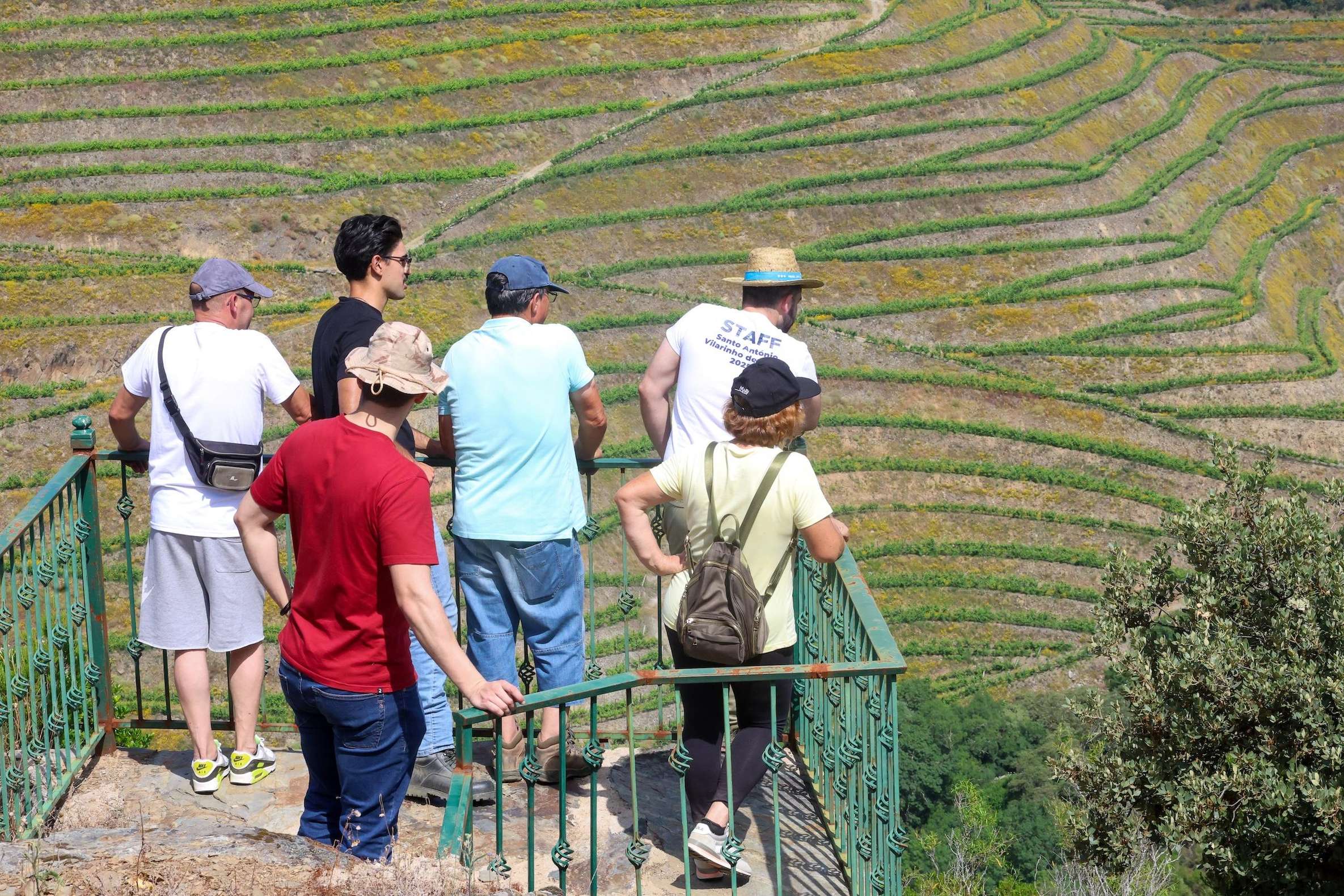
Three ways in, and each shows you a different valley. The Linha do Douro train from São Bento runs at water level for most of the trip to Pinhão, about 2 hours 15 minutes to 2 hours 20 minutes, looking straight up at the terraces.
Take the right-hand side heading east and open the window; the stretch from Peso da Régua onward is the best of it.
By road, the A4 dives through the Marão Tunnel in about four minutes and reaches Régua in 75 to 85 minutes, with Pinhão another 35 to 40 minutes up the N222.
The N222 is the road people remember: it runs high above the river with elevated views, and its 27-kilometer Régua to Pinhão stretch holds 93 bends.
Gentle ones, mostly at water level, but enough that a prone passenger should sit mid-van and mention it; drivers on these routes call out the windier sections ahead of time.
A guided van from central Porto takes about 1.5 hours and hands over every decision: the early start, the roads, the reservations.
Departures gather at spots like Palácio da Bolsa or near Porto Cathedral, though some historic hotels sit on streets a van cannot enter, so you may walk up to five minutes to meet your guide.
For most non drinkers the van wins: you keep the views from the road, skip the bends at the wheel, and let someone else handle the reservations that make or break a valley day.
What a non-wine day in the Douro Valley looks like, hour by hour
The day starts early. Departures from Porto run between 7:15 and 9 am, and for good reason: coach tours leave between 8:00 and 9:00, and you want the viewpoints before they do. The drive east takes 1.5 to 2 hours, or closer to two and a half by train.
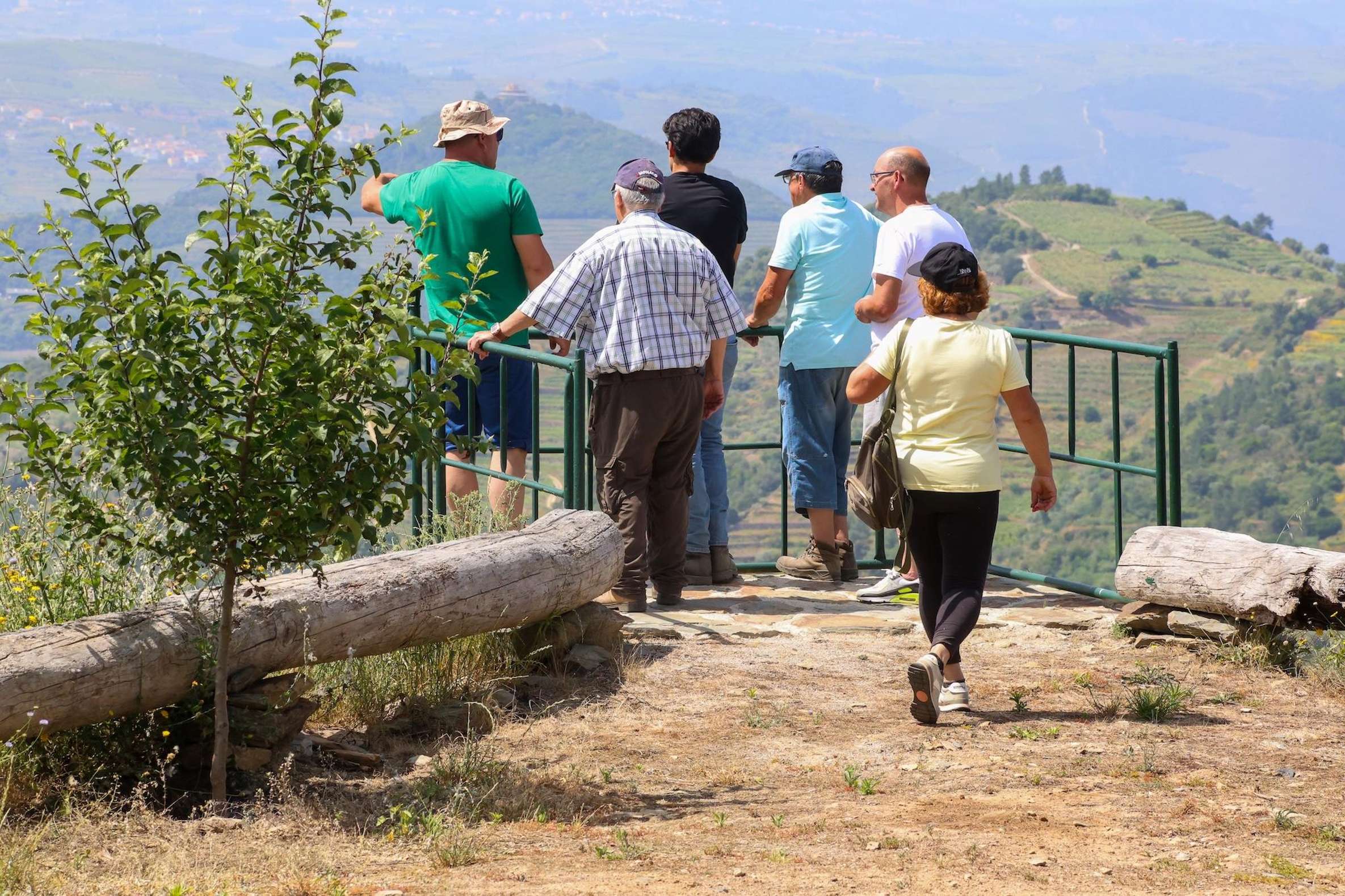
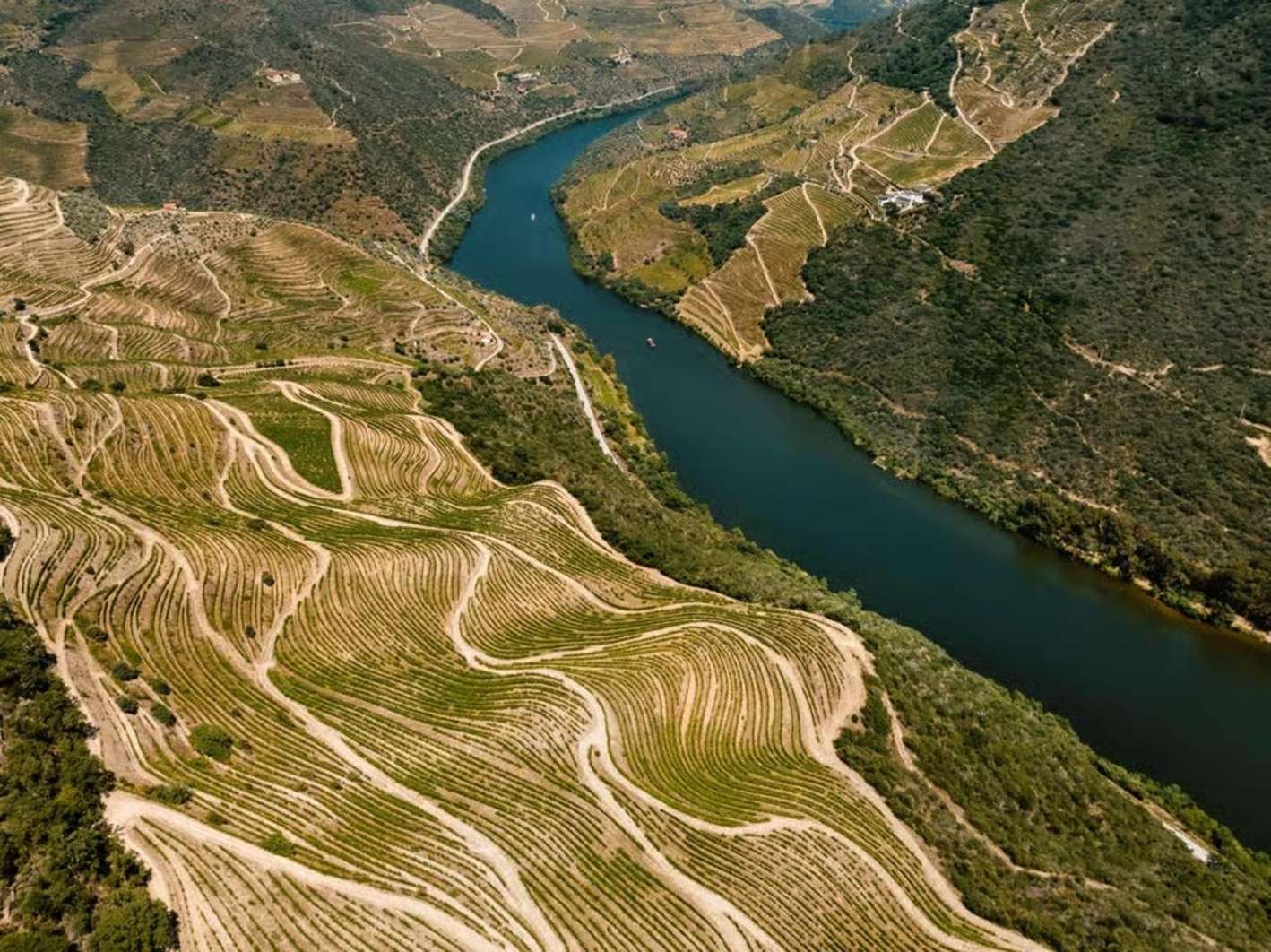
Late morning belongs to the lookouts. Miradouro de Casal de Loivos sits above Pinhão and can be reached by vehicle or a steep uphill walk; São Leonardo da Galafura lays out the whole terraced river valley below you. Roadside stops along the N222 fill in the rest without any building in sight.
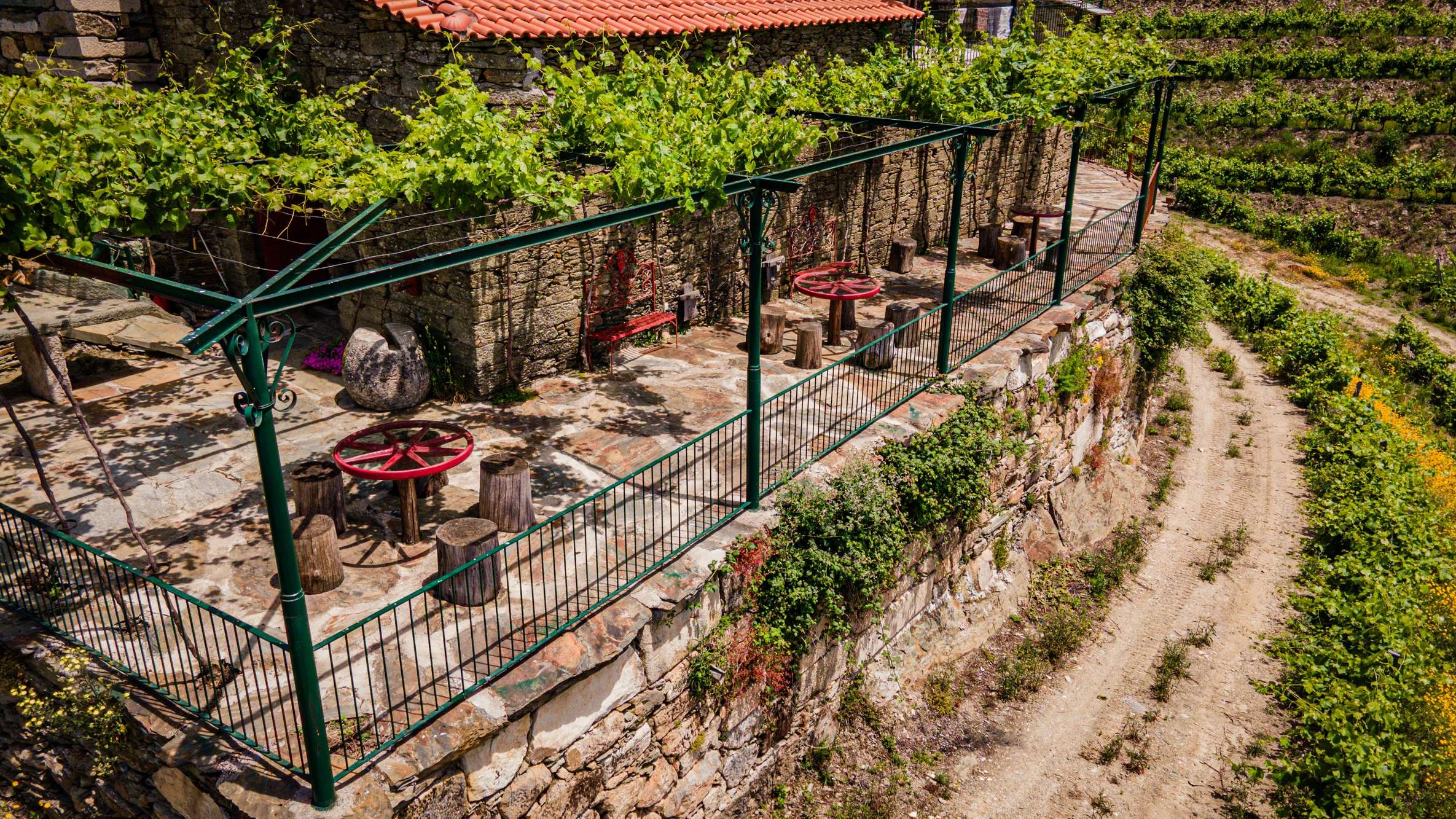
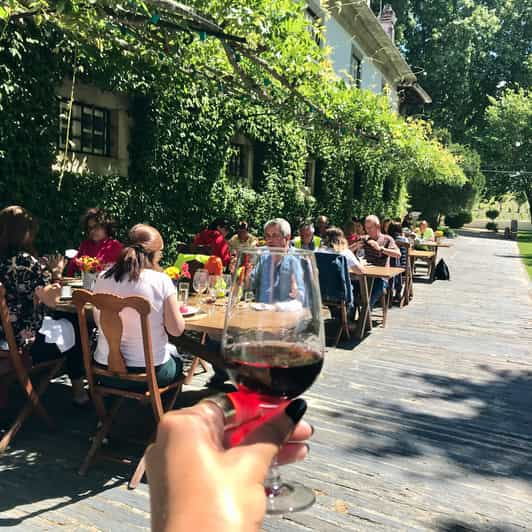
Lunch comes early, around 11:30 or noon, and that is deliberate: a 90-minute to 2-hour meal of hearty northern Portuguese dishes leaves the afternoon free for the water and the road back. On non-wine days the pairing at the table is olive oil, local food tastings or an estate picnic in place of wine flights.
- 17:15 to 9 amDepart Porto by van or train
Beat the coach departures that start at 8:00
- 2Late morningViewpoint stops above the river
Casal de Loivos, São Leonardo da Galafura, N222 lookouts
- 3Around 11:30 to noonLong lunch, 90 minutes to 2 hours
Northern dishes, olive oil or picnic in place of wine pairings
- 4AfternoonAbout an hour on the water at Pinhão
Rabelo boats leave from Cais do Pinhão; morning water is calmest
- 54:00 to 6:30 pmBack in Porto
Return along the river or the highway
The boat leg needs little planning on a tour: boats dock from piers on the riverside promenade at Cais do Pinhão, and on full-day circuits the 50-minute to 1-hour cruise usually falls in the afternoon, after lunch.
The river stays flat all year, held level by five dams, so there is no swell to brace for. The one hard rule comes from the waterway itself: boats must be off the river before dark, so nothing runs past sunset, however long a summer evening feels.
What to wear and bring for terraces and boats, and what happens if plans change
Schist terraces are the whole point of walking here, and they set the dress code. The stone steps and hillside tracks are steep and uneven, so closed-toe walking shoes with real grip do the job; flip-flops and smooth soles do not.
Summer adds sun gear, because exposed slopes with 14 hours of daylight offer no shade to hide in.
- Jun to AugHot and dry with highs near 29°C; wear breathable lightweight clothing, a wide-brim sun hat, sunglasses, and grippy closed-toe shoes.
- Sep to OctWarm harvest days cooling to 11°C with autumn rains; wear breathable layers, a water-resistant shell, and sturdy shoes with solid traction.
- Nov to FebCold and wet with highs around 9-13°C and slick schist; wear warm thermal layers, a waterproof jacket, and hiking shoes with deep tread.
- Mar to MayMild spring weather with cool mornings and passing showers; wear adaptable layers, a light rain jacket, and supportive walking shoes.
On the water the calculation flips. Open decks feel cool even on warm days, so layers and a windproof jacket earn their place from March to May and September to November, when daytime highs sit between 13°C and 22°C but the breeze on the river bites.
Pack a rain shell for the wet days, sunglasses for the sunny ones, and cash in euros, because boat bars and riverside kiosks frequently do not take cards.
As for the weather itself, these days run rain or shine. Heavy rain moves outdoor walks and terrace meals into covered estate spaces, and cruises carry covered boats or indoor seating. When storms or high river flow make sailing unsafe, operators swap in a land activity or offer a new date.
Either way, day tours allow cancellation up to 24 hours in advance for a full refund, and certain tours ask you to carry a passport or ID card, so check your booking's terms before you pack.
Joining a tour or exploring the Douro Valley on your own
Going solo is genuinely possible, which surprises people. The train reaches Pinhão in about 2 hours 15 minutes, and from the station several estates, the boat piers and the riverside cafés sit within a short walk, no car needed.
The complications start beyond the station. Roads between quintas are steep, narrow and winding, and with few river crossings the map distances lie; estate-to-estate driving takes far longer than it looks.
Many smaller and prestigious estates refuse walk-ins, so arriving on the train without reservations risks a day of scenery and little else. Boat tickets can be bought at the kiosks on the quay and outside the station, but walk-up slots sell out in high season.
A rental car adds one more rule that non drinkers dodge neatly: Portugal's limit is 0.5 g/l, and on these rural roads police test drivers actively, so in a car the designated driver sits out the pours.
As a non drinker you could take the wheel guilt-free, though the concentration the roads demand makes it a full-time job.
Amazing trip! Carlos was knowledgeable and fun, never a dull moment. Seven of us, perfect. Great value, boat, transport, tasting at a family estate, Amarante lunch, snacks throughout.
An organized tour absorbs all of it: the roads, the reservations, the early departure. That is the trade a day trip usually wants.
How to choose a Douro Valley tour that doesn't revolve around alcohol
Four checks separate a day that suits you from one that doesn't. First, what stands in for the tasting: olive oil, honey and homemade treats at the estates, or a hike with a picnic, beat a schedule that parks you in barrel rooms.
Second, the guide: live commentary in English, French, Portuguese, Spanish or German depending on the option booked, with English the usual default. Third, the terms: free cancellation up to 24 hours ahead, so a changed plan costs nothing.
Fourth, access, because many valley tours and vineyard walks are unsuitable for wheelchair users or travelers with significant mobility limits, and some walking tours exclude pregnancy.
Ask about a reduced or waived fee for a non-drinking partner too; some estates do not charge guests who skip the pours.
- A guide with youLive tour guide
- Free cancellationCancel up to 24 hours in advance for a full refund
- Book now, pay laterReserve your place and pay closer to the date
- Hotel pickupNo, you meet at the start
- Your languageEnglish, Portuguese
The guided hike on this page ticks the boxes that matter: a live local guide in English or Portuguese, a full refund up to 24 hours ahead, and a day built on trails and food from the start.
Tipping rounds the day off: optional in northern Portugal, appreciated in euro cash for good service, and never expected for rabelo boat skippers.
What else to see and do around the Douro Valley
Pinhão itself deserves the extra hour. The 19th-century train station keeps azulejo tile panels of vineyard harvests on its walls, and the 1906 iron bridge walks you out over the river for the panorama.
Within 300 meters of the quay sit a handful of riverside restaurants and wine bars, from Restaurante Douro Bites to Taberna do Rio, where a non-drinking lunch finds plenty on the menu.
- 1Porta de Entrada do Vale do Tuamuseum1 min walkDirections
- 2Centro Interpretativo do Vale do Tuamuseum1 min walkDirections
- 3Miradouro do Pescadorviewpoint3 min walkDirections
Show all 10 places
- 4Parque infantilpark or garden3 min walkDirections
- 5Parque Infantil Foz-Tuapark or garden4 min walkDirections
- 6Lok Drehscheibehistoric place5 min walkDirections
- 7Ponto de Observação do Chasco-pretopark or garden9 min walkDirections
- 8Miradouro Águas do Tuasight12 min walkDirections
- 9Baloiço Águas do Tuasight12 min walkDirections
- 10Miradouro Barragem do Tuahistoric place12 min walkDirections
- Calça Curta1 min
- Tua Taberna1 min
Amarante makes a natural pairing for a day that leans cultural: a historic center built for walking, coffee and pastries, and Doce de São Gonçalo, the town's signature sweet. Peso da Régua contributes its pedestrian bridge over the river, good for a slow view without buying anything.
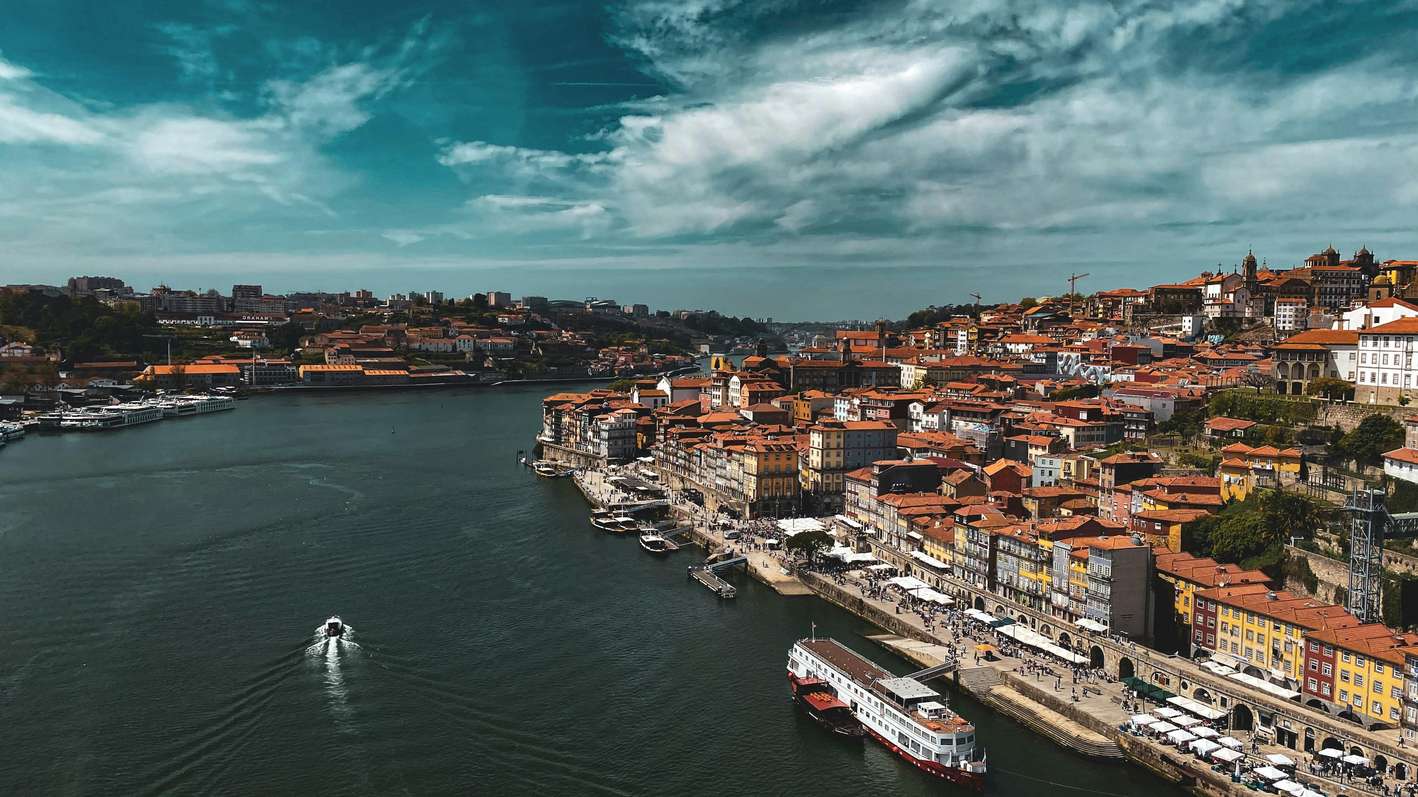
Back in Porto, the day can end at the water. The Ribeira waterfront and the Cais de Gaia riverfront face each other across the river, the Luís I Bridge upper deck stands 60 meters above the water, and Jardim do Morro draws the sunset crowd at its Gaia end.
All of it pairs with a valley day without repeating a single view.
Who this tour suits best, and who should book something else
This day belongs to hikers and to travelers who want the valley sober and on foot: the 3- to 5-hour guided routes, the ruins, the river-view finish.
It works best as a third day in Porto, when the city's essentials have had their two full days and the valley becomes the independent escape. Travelers who can spare two nights in the valley itself get a richer version still.
It is the wrong booking for a two-day Porto stay, which needs both days in the city, and for anyone starting from Lisbon: the round trip alone eats 7.5 to over 8 hours of driving.
Families with toddlers should weigh the format carefully, since full-day runs to the upper valley exhaust small children. And anyone with limited mobility should check the route first, because terraces and uneven ground are not negotiable on these trails.
What to know before you book a Douro Valley tour for non drinkers
Miradouro de Casal de Loivos above Pinhão and the lookout at São Leonardo da Galafura give you the full sweep of terraces and river without stepping into a tasting room. Most road itineraries from Porto pause at at least one of them late in the morning, when the light sits well on the schist slopes.
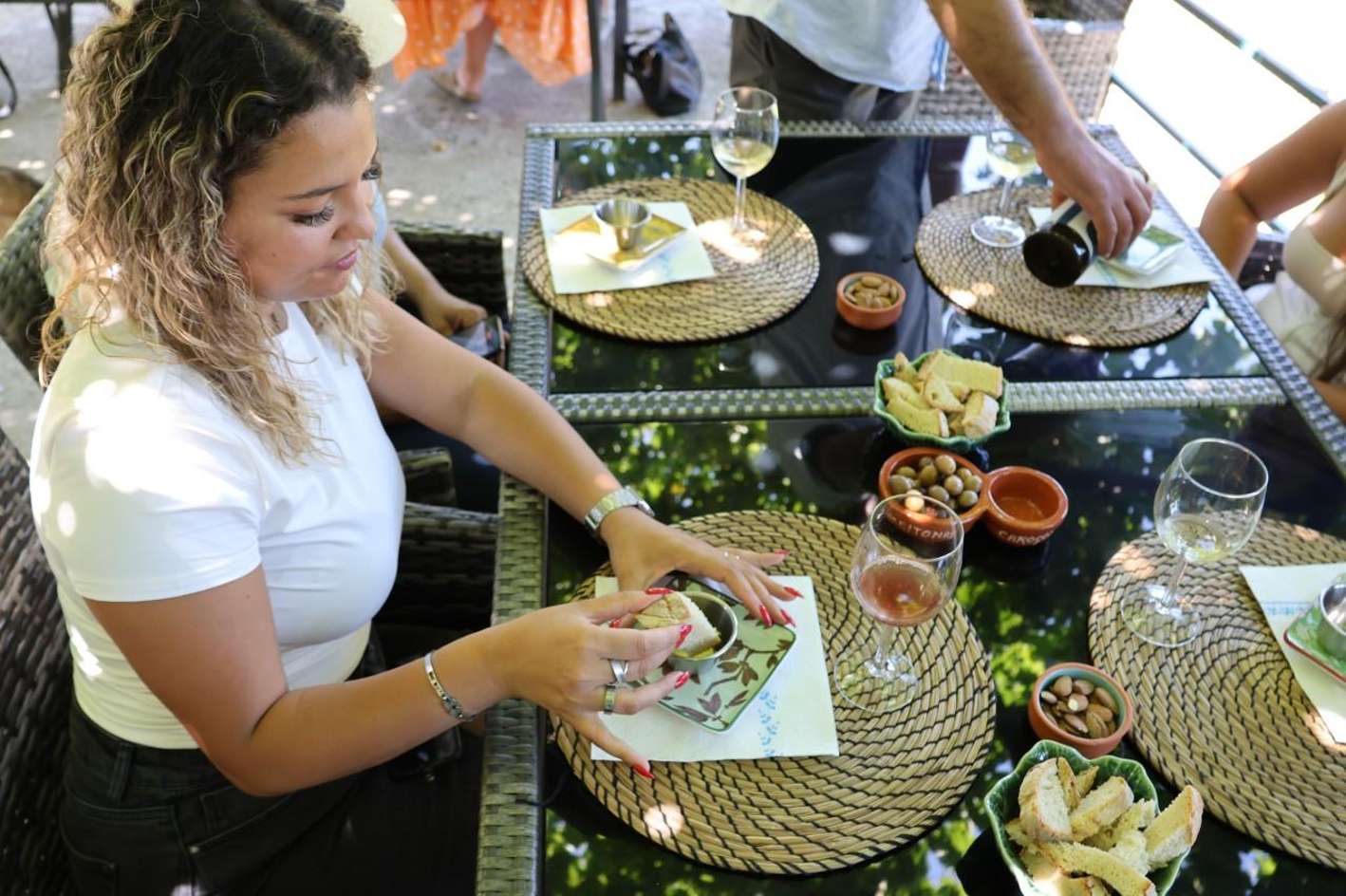
Estates pour things besides wine. Olive oil tastings run alongside the cellar visits, and some add regional honey and homemade treats, so you taste the valley's produce even when the glass stays full of water. Ask when you book and the host will set you up.
Estate kitchens and guides reliably handle vegetarian and gluten-free requests, but they need to know in advance. Mention allergies or restrictions when you book rather than at the table, especially on tours with a reserved multi-course lunch.
The vineyard terraces are steep, with uneven stone steps and gravel paths, so wear closed-toe shoes with strong grip. Flip-flops and smooth soles slip. In summer bring a sun hat and sunscreen; in the cooler months add a waterproof layer and deeper-tread shoes.
The valley roads wind hard. The 27-kilometre stretch of the N222 between Peso da Régua and Pinhão holds 93 bends. Drivers on guided tours warn passengers before the twisty segments, which helps, but if you are prone to travel sickness sit near the front and take your usual remedy.
On the Linha do Douro train from Porto, the river runs along the right-hand side as you approach the valley. Sit on the right, open the window, and you watch the terraces from water level for the whole ride into Pinhão.
Tours run rain or shine. Heavy rain moves outdoor walks into covered spaces and covered boats, and the cruise can be swapped for an indoor activity only when sailing is unsafe. Bring a rain jacket or a compact umbrella in the wetter months and carry on anyway; the scenery holds up.
Some full-day tours ask you to bring a passport or national ID card, and you may be asked for it at check-in or boat boarding. It costs nothing to carry it, and it can stop the day if you leave it behind.
Day tours can be cancelled up to 24 hours before departure for a full refund, so a change of plans the day before costs you nothing. Book your preferred date early anyway, since boat departures and harvest-season slots sell out days ahead.
Tipping in northern Portugal is optional and appreciated for good service, never required. If a guide or estate host makes your day, euro cash is the welcome way to thank them, and rounding up for the boat crew is enough.
Worth it, sober, on foot
For non drinkers who like walking, this is the best version of the valley: real trails, real ruins, a picnic and a river viewpoint, none of it hinging on a pour.
Book it if you have three days in Porto and shoes with grip. Choose the 4 km easy downhill route if you want the views without the climb.
Your questions about a non drinkers tour of the Douro Valley
Is a Douro Valley day trip worth it if I never drink wine?+
Yes. The valley's real draw is the scenery and heritage: terraced hillsides, a winding river, and villages built around centuries of vine growing. You can fill a day with viewpoints, hikes, boat rides and a proper regional lunch, and many visitors who drink little wine say the tour keeps them engaged from start to finish.
What can I taste instead of wine at a quinta?+
Estates often pour olive oil and offer honey and homemade treats alongside their wine tastings. Ask when you book, or look for tours that name an olive oil mill visit in their program.
Will I feel awkward in a group where everyone else is drinking?+
You shouldn't. Guides keep the day moving through viewpoints, stories, river time and meals, and tastings are usually one short segment rather than the whole agenda. Tell your guide when you board, and they can simply keep your glass empty without a scene.
Can I join a wine tour while my partner does the tasting?+
Yes, at the same estate. Some wineries charge nothing for guests who skip the pours, others apply a discounted fee, and a few charge full price because the seat and tour cost money. It varies by estate, so ask the tour operator when you book.
Can I avoid tasting rooms altogether?+
You can. Full-day river cruises skip winery visits entirely, and short sightseeing boats leave straight from Porto so you spend your day on the water without the drive upriver. Guided hikes and viewpoint routes keep you outdoors the whole time.
What would a no-wine day actually look like?+
Most itineraries leave Porto early, between 7:15 am and 9 am, and reach the valley in roughly two hours.
Late morning you stop at a lookout such as Miradouro de Casal de Loivos above Pinhão, then settle in for a long regional lunch where olive oil and local food tastings stand in for wine pairings. You are back in Porto between 4 pm and 6:30 pm.
Which viewpoints can I visit without going near a tasting room?+
Several sit right on the valley rim: São Leonardo da Galafura for the classic terraced panorama, Casal de Loivos above Pinhão, and the quieter Miradouro São Cristovão and Miradouro de Adorigo. None require an estate booking.
What is there to do in the towns if I skip the wine?+
Amarante rewards a slow walk through its historic center with a coffee and a slice of Doce de São Gonçalo, the town's signature pastry. Peso da Régua has a scenic pedestrian bridge over the river that makes an easy photo stop.
What if I get carsick on the valley roads?+
The roads in and out of the valley are steep and full of bends, so sit toward the front and mention it to your driver. Drivers on guided tours call out the windiest stretches in advance, which gives you time to look ahead rather than out the side window.
Are the boat and walking parts safe if I cannot drink but want the full route?+
Yes. The river runs calm because dams regulate the flow, and the scenery carries the day on its own. If a hike is part of your plan, bring sturdy shoes and water, and check the difficulty rating before you book.
What happens at lunch and cellar visits for someone who does not drink?+
Guides and restaurants in the valley handle dietary needs and preferences well, so say at booking that you will not be drinking. You still get the full meal, the cellar walk and the views, and the poured samples simply pass you by.
Do I need to book ahead if I am not joining a tasting?+
Mostly yes. Many smaller quintas take no walk-in visitors at all, and even boat departures can sell out a day or two in advance during harvest. Book anything you plan to join, and request an English-speaking session where a guided visit is involved.